Wednesday, January 25, 2012

Warning Against Educated Pride


Francis grieved very much if anyone neglected virtue and instead sought after study which causes pride in oneself, especially if anyone did not persist in the vocation to which he was called from the beginning.  He was given to say, “My brothers who are led by the desire of learning shall find their hands empty in the day of tribulation.  I desire that they be strengthened in virtues, that when the time of tribulation will come they will have the Lord with them in their troubles.  For a time of tribulation is to come, when books will be of no use and will be hidden in closets and cupboards.”  He did not say this because the reading of Holy Scriptures displeased him, but only that he might withdraw some from too much care of learning.  For he wished them to be good by charity than by pieces of truth through the desire of knowledge.  He understood ahead of time the time that was to come in which he already knew ahead of time that prideful knowledge would be an opportunity to be ruined.  At one point, he appeared after his death to one of his brothers too intent on the study of preaching, and he reproved and prohibited him and ordered that he should study to walk the path of humility and simplicity.
                        -Section IV, Chapter 69

Study is profitable, but only if it helps us accomplish the desire of God.  To obtain more and more education for its own sake is a constant temptation for some of us.  It is an accomplishment, and it is often mistaken for wisdom.   Education is not an end in and of itself.  God save us from counting the books we read or from trying to impress others with our degrees.  Wisdom only comes through loving action.  Education can be a tool in accomplishing that, as a surgeon, to save lives, must spend years in hard study.   But the education isn’t the end—saving lives and souls is all that really counts.

"Of the making of books there is no end,
And much study wearies the flesh" -Ecclesiastes 12

Fighting Against The New


When Francis was in the Chapter-General at St. Mary of the Porziuncula (which was called the Chapter of the Mats, because there were no dwellings there except made of mats and there were five thousand friars there), several wise and learned friars went to my Lord of Ostia who was there and said to him, “My Lord, we wish that you would persuade Brother Francis to follow the counsel of the wise brothers and to allow himself now and then to be led by them.”  And they quoted the Rule of St. Augustine, of St. Benedict and of St. Bernard who taught thus and thus to live in order.  And when the Cardinal had repeated this to the holy man, by way of admonition, Francis didn’t answer him at all, but took him by the hand and led him to the friars assembled in the Chapter, and spoke thus to the friars in the fervor and power of the Holy Spirit, “My brothers, my brothers, the Lord called me to the way of simplicity and humility and this path he has shown in truth for me and for those who will believe and imitate me.  And therefore I wish that you do not quote to me any other rule—neither St. Augustine’s, St. Benedicts, Bernard’s nor any other way of living—except the way which was mercifully shown to me by the Lord.  And the Lord said to men that He wished me to be a new covenant in this world and He would lead me by another way than by this understanding.  God will confound you through your wisdom and knowledge and I trust in the police of the Lord that God will punish you by them and that you will return to the previous state, whether you wish to or not.”  Then the Cardinal was very amazed and said nothing and all the friars feared greatly.
                        -Mirror of Perfection Section IV, Chapter 68

Religion’s natural tendency is to be conservative, to stick with what worked in previous times.  The way of God is to push boundaries, to lead people to be more in line with His will.  Since we have not yet met the level of His mercy and grace, let alone His wise judgments in our church, then we still need to change, to reform ourselves.  Francis was accomplishing something new, something God-given.  Benedict was certainly accomplishing something new and powerful in his day.  But we must not use the successes of the past to undermine the potential successes of the future.  We must remember the wise counsel of Gamaliel to the Sanhedrin: “If it is not of God, it will be overthrown, but if it is of God, no one can fight against it, or you may find yourself fighting against God.”

Many will keep the old traditions warm.  But dare not fight against the new thing God is accomplishing. 


Thursday, January 19, 2012

Lord Make Me An Instrument


This is the most beautiful rendition of the most beautiful prayer ever.

However, this prayer was not written by Francis of Assisi, but probably by a Franciscan monk of the 18th century.  Even so, it reflects the spirit of Francis, as well as the Spirit of Jesus. 

Recognizing God's Discipline


One time Francis went to Rome to visit my Lord of Ostia.  And when he had stayed some days with him, he visited also My Lord Leo the Cardinal, who was very devoted to the friars.  And because it was then winter and altogether unfit for going on foot because of the cold and the winds and the rain, he asked him to stay with him some days, and as a beggar to receive his food from him, with the other beggars who daily used to eat in his house.  The Cardinal said this because he knew that Francis would only be received as a beggar wherever he visited, although the Cardinals and the Pope would receive him with the greatest devotion and reverence and would honor him as a saint.  The Cardinal added, “I will give you a fair house separated from the main house where you may stay and pray and eat as you wish.”  Then Friar Angelo Tancredi, who was one of the twelve first friars, who also stayed with the Cardinal, said to Francis, “Brother, there is a near here a tower that has room and is separated where you may stay as if in a hermitage.”  And when Francis saw it, the room pleased him and he returned to the Cardinal and said to him, “Perhaps I will stay with you for a few days.”  And the Cardinal rejoiced greatly. 

            So Brother Angelo went and prepared the place in the tower for the blessed man and his fellow.  And because Francis would not come down from the tower as long as he should remain with the cardinal, nor did he wish anyone to disturb him, Brother Angelo promised and took orders to daily carry food to him and his fellow.  And when Francis had gone there with his brother, on the first night while sleeping demons came and beat him terribly.  He called his brother, “Brother, demons have beaten me terribly and so please remain with me for I am afraid to stay alone.”  That night his brother stayed with him, for Francis trembled as a man who suffers from a fever, and so both brothers remained alert the whole night.  During the night, Francis asked his brother, “Why have the demons beaten me, and why is the power to hurt me given to them by the Lord?”  And he said, “The demons are the police of the Lord.  For as the Podesta sends police to punish the sinner, so the Lord sends his police—meaning, the demons who in this world are his servants, who corrects and chastens those whom He loves.  For many times the perfect Religious sins ignorantly; but since he does not know he sins, he is attacked by demons, so he might look and consider, within himself and outside, those things in which he has offended.  For the Lord loves with a true love, and nothing in them does he leave unpunished.   But by the mercy and grace of God, I do not know that I have stumbled in anything which I have not made right by confession and penance.  Rather, by his mercy, God has granted me this gift that I may receive in prayer a clear knowledge of all things in which I may please or displease Him.  Perhaps he chastens me now by his police and though it is necessary to my body to receive this rest, yet many friars suffer tribulations and there are other friars who live in hermitages and poor little dwellings.  Perhaps when they shall hear that I live with my Lord Cardinal, they may be tempted to murmur, saying, ‘We bear so many adverse things and he has his consolations.’   I am required to always give them a good example, and it was for this reason I was given to them.  For the brothers are more edified when I abide in their own poor little dwellings amongst them, than in others; and they bear their tribulations more patiently when they hear that I also bear the same.” 

So it was the highest concern of Francis the he might give all good example and that he might take away any occasion of murmuring concerning him from other friars.  And on account of this, whether for good or ill, he suffered so much that the friars who knew him as we who were with him to the day of his death did, as often as they read those things or called them to memory, cannot stop their tears from coming and they sustain all their tribulations and necessities with greater patience and joy.  

So Francis came down early from the tower and went to the Cardinal, telling him all the things which had happened to him and what he had borne with his brother.  He said to him, “Men think me to be a holy man, but demons have cast me out of a religious cell!”  And the Cardinal was happy with him.  Yet because he knew and honored him as a saint, he would not contradict him after he was unwilling to stay there.  And so Francis, after bidding the Cardinal farewell, returned to the hermitage of Fonte Palumbo, near Rieti.
                        Mirror of Perfection, Section IV, Chapter 67

Francis could rightly be called a madman.  He was crazy for God, but there is a time for everyone to listen to their personal insanity.  Clearly, that place was not for Francis, but he had no requirement to remain there, so he moved on.  In fact, Francis was really uncomfortable with comfort.  

The spiritual principle here, however, is that God will communicate to us in various ways what He wants, sometimes subtlety and sometimes with power.  Whatever the case, we need to listen to God's discipline, and not just dismiss it.  We are God's children and God doesn't discipline us because He hates us but because He greatly desires for us to be as functional as possible. 


Ministering to Thieves


Above the Borgo San Sepolcro some friars lived in a hermitage, and to them, from time to time, came certain thieves, who used to lie in the woods and steal from those who passed by.  Some of the friars used to say that it was not good to give hem assistance, but others gave out of compassion, so that they might admonish them to repentance.  At one time Francis came to that place and the friars asked it it was right to give charity to the thieves.

 Francis said to them, “If you will do as I tell you, I trust in the lord that you will gain their souls.  Go, get some good bread and good wine and carry these to the wood in which they live and shout out to them, ‘Brother thieves, come to us, because we are friars and we will bring you good bread and good wine.’  They will come and you should spread a cloth on the earth and place on it the bread and wine and serve them humbly and joyfully until they have eaten.  But after the meal you will speak to them of the Word of the Lord, and finally you shall ask of them for the love of God that they will promise you this first petition, that they will not strike nor do evil to any one, in his body.   For if you ask all things as once, they will not hear you, but on account of your humility and charity they will immediately promise you this.  Then on another day on account of their good promise, you will carry to them with the bread and wine some eggs and cheese.  And you will serve them until they have eaten and after the meal you will say to them, ‘Why do you stay here all day to die of hunger and to bear so much adversity, and do many evil things for which you will lose your souls, unless you be converted to the Lord? It is better that you should serve the Lord, who will give you the necessities of the body in this life and in the end will save your souls.’  Then the Lord shall inspire them.  For the sake of the humility and charity you have shown them, they will be converted.” 

            And so the friars did all these things as the holy Father instructed them; and those robbers, through the grace and mercy of God, heard and kept letter by letter and point by point all things which the friars humbly asked of them.  Rather, on account of the humility and kindness of the friars toward them, they began to humbly serve the friars themselves, carrying on their shoulders their wood up to the hermitage.  And some of them at last entered religion.  But the others, confessing their faults, did penance for their sins, promising in the hands of the friars for the future that they would live by the labor of their hands, and never gain do such deeds.
                        -Mirror of Perfection Section IV, Chapter 66

In the twelfth century, thieves were actually brigands, and were quite dangerous.  They would attack people on the roads and attempt to obtain whatever wealth they could, often with complete disregard to lives.  This ministry Francis sent his brothers on was dangerous, even deadly.  But given the right approach, the most evil people can be delivered from their evil lives and brought to life.

The greatest ministry is accompanied with the greatest danger.  And there is no ministry without risk. 

Thursday, December 22, 2011

Rejoicing in False Blame


When the time of the annual meeting was drawing near, Francis said to his fellow, “It seems to me that I am not a Friar Minor, unless I am in the state which I will tell you. Look how the friars invite me with honor to the Chapter and moved by their devotion I go to the annual meeting with them.  But once gathered together, they ask me to announce to them the Word of God and to preach among them.  And rising up, I preach to them as the Holy Spirit had taught me.  If it should be, after I have finished my sermon, they all cry out against me, ‘We will not have you to rule over us for you are not eloquent, as is right, and you are too simple and idiotic and we wouldn’t want such a simple and despised a superior over us.  Therefore, do not call yourself our leader!’  In this way they cast me out with blame and reproach.  It would seem to me then that I was not a Friar Minor, if I did not rejoice to the same extent when they reproached me and cast me out with shame, unwilling that I should be their leader, as when they venerate and honor me—holding their benefit and usefulness to be equal in either case.  For if I am glad when they exalt and honor me on account of their devotion, where there may still be a danger to my soul—then much more should I rejoice and be glad of my personal benefit and the salvation of my soul when they blame me, because the gain to my soul is certain.”
                        -Mirror of Perfection, Section IV, Chapter 64

This may seem another example of Francis' extremism.  But Francis is simply putting together two principles of Jesus.  

Jesus said that we are not to take honor in outward show.  He commanded this in Matthew 6, where our prayers are to be secret and our fasting private only to God.  Jesus also said in Matthew 23 that leaders who make a display in order to receive honor should only have shame.  Any leader who is recognized for great works or how wonderful they are should be made uncomfortable by adulation. 

Jesus also said that his true disciple would have persecution and rejection.  Paul went so far as to say, "Anyone who lives a godly life in Christ Jesus will be persecuted."  Thus, when persecution comes, we ought to rejoice that we are true disciples of Jesus, and not reject it at all.  Even so, in Acts 5, when the apostles were scourged, they rejoiced that they were counted worthy to suffer for Jesus' name.  

How often do we have that attitude when being rejected for doing right?  Perhaps we should meditate like Francis more often, to be ready to accept persecution correctly when it comes.

Hypocrisy


As Francis went through the city of Assisi, a certain poor old woman begged an alms of him for the love of God.  And he immediately gave her the mantle which he had on his back and without delay he confessed in the presence of those who followed how in this he had pride.  And we have seen and heard so many other example like this of his great humility, we who were always in his company, that neither with words nor with letters can we narrate them.  For Francis had his main focus on that he would not be a hypocrite before God, and though on account of his infirmity a liberty would be necessary to him, yet he took thought with himself, always to show a good example to the friars and to others, so that he sustained all poverty patiently that he might take away from everyone all occasion of murmuring.
                        -Mirror of Perfection, Section IV, Chapter 63

As in the last selection, we see Francis' high demands on himself requires shame that we might not recommend to others.  Perhaps it is enough that Francis could have a private confession of his thoughts of pride.

On the other hand, like Jesus, Francis took hypocrisy very seriously.  If it looked like he was doing one thing, but really doing another, he wanted it to be known, and to recognize that his thoughts aren't always saintly.  Francis may or may not have sought to be a saint, but he knew himself to often not have holy or loving intentions.  This is important for all of us.  We need to clearly see ourselves as who we really are, and not make ourselves to be more holy, more religious, more pious or more God-loving than we really are.

There are many churches that encourage the opposite.  They want to see more God language, more praising, more outward show.  This isn't necessarily bad, but if there isn't also the outward confession of saying what one doesn't really feel or acting in a way that doesn't reflect a real inner life, that is bad.

We've got to recognize all of our occasional hypocrisy.  But we also need to do what we can to do away with such religious falsity. 

Tuesday, December 13, 2011

Scruples


At one point, Francis had suffered from an illness, but he had become a little stronger after the worst of it.  It seemed to him that he had given himself some leniency during that weakness, even though he had only eaten a little.  He arose one day, although he was not yet free from the fever, and he had the people of Assisi called together in the marketplace, for preaching.  When his sermon was done he warned the people that no one should go away from there until he returned to them.  Then he entered the cathedral of St. Rufinus with many friars and with Brother Peter of Catana who had been canon of that church and was chosen first Minister-General by Francis, he spoke to that brother peter, ordering him by obedience, that he should without contradiction do whatever he said to him.  Brother Peter answered, “Brother, I neither may nor ought, will or do anything except as it may please you.”  Casting off his tunic, Francis told him to bind a cord around his neck and to drag him naked to the place where he had preached, and then at that place to throw ashes over his face.  But Brother Peter did not obey him because of the compassion he had for him.  But Peter did take the cord bound around his neck, dragged him out, as Francis had ordered.  He was weeping so hard, and the other friars who were with him shed tears of compassion and of bitterness. 

            When Francis had been led naked before everyone up to the place where he had preached, he said, “You, and all those who, after my example, leave this world and enter religion and the life of the friars, believe me to be a holy man, but I confess to God and to you that I have eaten in my infirmity meat and broth made from meat.”  And all began to weep over him for great pity and compassion, especially because it was then Winter and a very intense frost, and he was not yet recovered from his fever.  Striking their breasts, they accused themselves, saying, “If this saint, for just and clear necessity, accuses himself with so much shame—although we know him to be holy, and we know to be living in the flesh as if almost dead on account of the great abstinence and austerity which he has made to his body from the beginning of his conversion to Christ— what shall we wretched ones do, who for the whole time of our lives have lived and still live according to the desires of our flesh?”
                        -Mirror of Perfection, Section IV, Chapter 61

Was Francis justified to condemn himself for such a small action?  We don't know his heart, or his personal commitment before God, but certainly eating some extra protein when he is sick isn't a sin.  In fact, if it were one of Francis' brothers, he would insist that the brother be forgiven and that nothing be done in punishment to him.  But Francis wouldn't forgive himself.  His guilt was such that he insisted on such an extreme punishment.

God does not require such dramatics in order to be forgiven.  God wants a penitent heart and a confessing mouth, and God is ready to forgive.  Francis himself displays that in other stories.  For some of us, it is much harder for us to forgive ourselves than it is for God to forgive us, or for us to forgive others.  We need to remember that God demands mercy, not sacrifice-- even for ourselves.  If God has forgiven us and we refuse to forgive ourselves, then we are calling God a liar.

Wednesday, November 30, 2011

Accepting the Outcast


Francis, having returned to the church of blessed Mary of the Porziuncula, found Brother James the Simple with a certain leper much ulcerated.  For Francis has commended that leper and all others to him, because he was as it were their physician, and he freely touched their wounds and cleansed them and took care of them, for then the friars used to abide in the hospitals of the lepers.

            But Francis said to Brother James, as if reproving him, “You ought not to lead out these Christians, because it is neither decent for you nor for them.”  For though he wished to serve them, he did not wish that those who were most afflicted to be taken out of the hospital because people would be abhorred in seeing them.  Brother James was so simple that he used to go with them from the hospital to the church of St. Mary of the Porziuncula, as he would have gone with one of the friars.  And Francis used to call the lepers Christian brothers. 

            After Francis had said this, he immediately blamed himself, believing that the leper had been put to shame for the blame which he had thrown on Brother James.  Therefore, desiring to satisfy God and the leper, he confessed to Brother Peter of Catana, who was then Minister-General.  And he said, “I wish that you would confirm to me the penance which I have chosen to do for this fault and that you would not contradict me.”  He answered, “Brother, do as you please,” for Brother Peter so venerated and feared him that he did not presume to contradict him, even though Francis was often afflicted with guilt.  Then Francis said, “Let this be my penance, that I eat of the same dish as my Christian brother.” 

Therefore, when Francis sat down to the table with the leper and with other friars, one dish was placed between Francis and the leper.  But the leper was all ulcerated and loathsome, and especially he had his fingers shriveled and bleeding with which he took up lumps from the dish, so that when he put them in the dish the blood and matter of the fingers flowed into it.  And, seeing this, Brother Peter and the other friars were saddened, but did not dare to say anything on account of the far and reverence of Francis.  He who saw this wrote it down and bears testimony of these things.
                        Mirror of Perfection, Section IV, Chapter 58

Francis, Francis.  What am I going to do with you?  

Francis' impulse was wonderful here.  He wanted to feed and clean the lepers, and this was partly because of his own deep fear of lepers from a young age.  Of course, we now know that leprosy (now called Hansen's Disease) isn't really contagious to adults.  But in the ancient world, it was considered extremely contagious. 

Francis was so mortified by his possible rejection of unity with his leper brother that he caused even MORE embarrassment to the leper by insisting that they ate of the same bowl, and then calling it "penance". 

Francis wanted to accept the outcast, especially the outcast he was particularly averse to.  It is a good notion, but what is more important that we love all the outcast, which means radical acceptance, even in the fact of society's rejection.  The mentally ill, the homeless, homosexuals, felons, and all others that are rejected by society, we need to go out of our way to accept.  Not in a halfhearted way, like Francis, but with full love, and full joy.  This doesn't mean we don't take care to not recognize the weaknesses of those we accept-- whether it be contagion or potential criminal behavior.  But we find ways to make our friends be comfortable and helped in as much as we can.


Wednesday, November 16, 2011

Cleanliness Next to Godliness


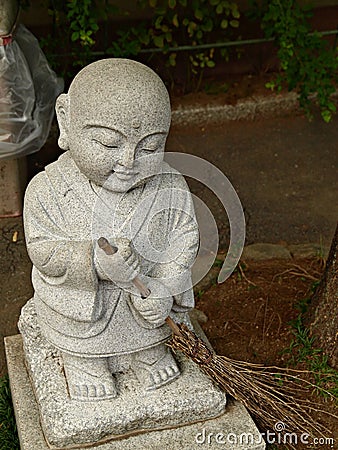
On a time when he was staying at St. Mary of the Porziuncula, and there were as yet but few friars, blessed Francis went by those villages and churches in the neighborhood of Assisi announcing and preaching to men that they should do penance, and he carried a broom to sweep out unclean churches.  For the holy Father grieved much when he saw any church not so clean as he wished.  And therefore, when the preaching as finished, he always made all the priests who were there gather together in some remote place, lest he should be overheard by the lay folk, and preached to them of the salvation of souls and especially that they should be careful to keep clean the churches and altars, and all things which pertained to the celebration of the divine mysteries.
                        -Mirror of Perfection, Section IV, Chapter 56

Early in Francis' life he was called by God to "Rebuild my Temple." Francis at first thought he was to repair a chapel near his town.  So it only makes sense that he would become a fanatic about churches being clean.  It's kind of how he started on the path to sainthood.

Cleanliness by itself isn't that significant.  It's nice to keep things clean, but not at the heart of godliness.  However, to clean for another is to show respect for them.  It is to humble oneself low enough to do a demeaning task that we pay minimum wage for.  Cleaning for others, and especially cleaning for God, is important for a healthy soul.